

Key Takeaways
- Gold purity is measured in carats: 9k gold contains 37.5% pure gold, 14k contains 58.5%, and 18k contains 75%.
- Yellow gold is the most traditional, lowest-maintenance option, while white gold needs occasional rhodium replating to stay bright.
- Rose gold gets its warm pink colour and added durability from its copper content, and needs little ongoing maintenance.
- Higher carat gold looks richer but is softer, so 9k and 14k gold generally hold up better to daily wear than 18k.
- Vinny & Charles handcrafts wedding bands in 14k solid gold, chosen as the balance between durability, luxury and everyday wearability.
There is more to choosing a wedding band than simply picking a favourite colour. Your ring should reflect your personal style while suiting your long-term maintenance preferences. Most couples today choose between yellow, white or rose gold, and each colour offers a distinct look and feel.
Understanding the differences between the three, and between the gold carats they come in, will help you find a wedding band that symbolises your commitment for years to come.
Deciphering Gold Carats: The Differences Between 9k, 14k and 18k Gold
Gold carat, sometimes written "karat", measures how much pure gold is mixed into a metal alloy, expressed out of 24 parts. Pure gold on its own is naturally soft, so other metals are added to improve its durability for everyday wear.
| Carat | Pure gold content | Durability | Best for |
|---|---|---|---|
| 9k | 37.5% | Most durable and affordable | Active lifestyles, everyday wear |
| 14k | 58.5% | Balanced durability and richness | Most wedding bands |
| 18k | 75% | Richest colour, softer metal | Those prioritising a luxury tone over hardness |
9k Gold
- Contains 37.5% pure gold, with a higher proportion of alloy metals.
- The most durable and generally the most affordable carat option.
- Resistant to scratches, making it a practical choice for active lifestyles.
14k Gold
- Contains 58.5% pure gold.
- Balances durability, luxury and value.
- One of the most popular carats for wedding bands worldwide.
18k Gold
- Contains 75% pure gold.
- Has a warm, rich tone with a more luxurious feel.
- Softer than 9k or 14k gold, so it may scratch more easily over time.
The right carat for you depends on whether you value affordability and durability, or a deeper, richer gold tone.
Yellow Gold Bands: The Timeless, Classic Choice for Traditionalists
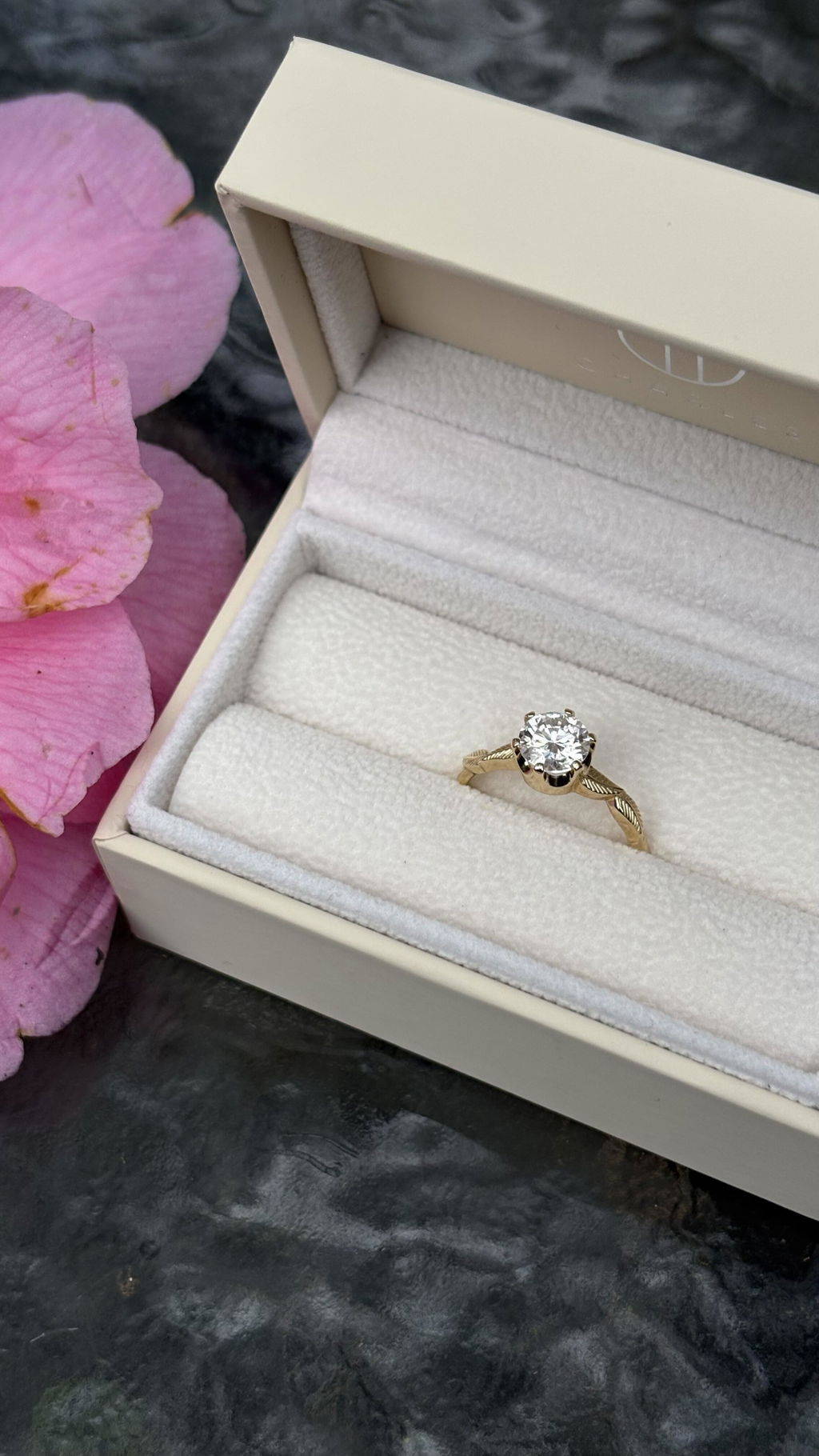
Of the three colour options, yellow gold is the most traditional for wedding bands and has remained popular for generations. With a warm glow and elegant appearance, it has a timeless look that never goes out of style. Because it closely resembles the natural colour of pure gold, yellow gold requires less maintenance than white gold.
Small scratches also tend to blend into the metal more naturally over time. This classic colour pairs beautifully with both vintage and traditional diamond rings, and is especially flattering on warmer skin tones, such as olive and darker complexions.
White Gold Bands: Modern Radiance and the Importance of Rhodium Plating
Many couples are drawn to white gold for its similarity to platinum, offering the same sleek, contemporary appearance at a fraction of the cost. With a bright, reflective finish, this colour makes diamonds appear especially brilliant, ideal for a dazzling engagement ring pairing.
White gold is created by combining pure gold with white metals such as palladium or nickel. Rhodium plating is then applied over the top, a thin layer of rhodium metal that gives the ring its bright, reflective white finish and adds extra durability. Over time, this plating naturally wears away, so white gold bands may need occasional re-plating to maintain a bright, white finish.
White gold appeals to those who prefer minimalist, modern jewellery and complements cooler skin tones particularly well.
Rose Gold Bands: Romantic, Vintage Appeal with Organic Styling
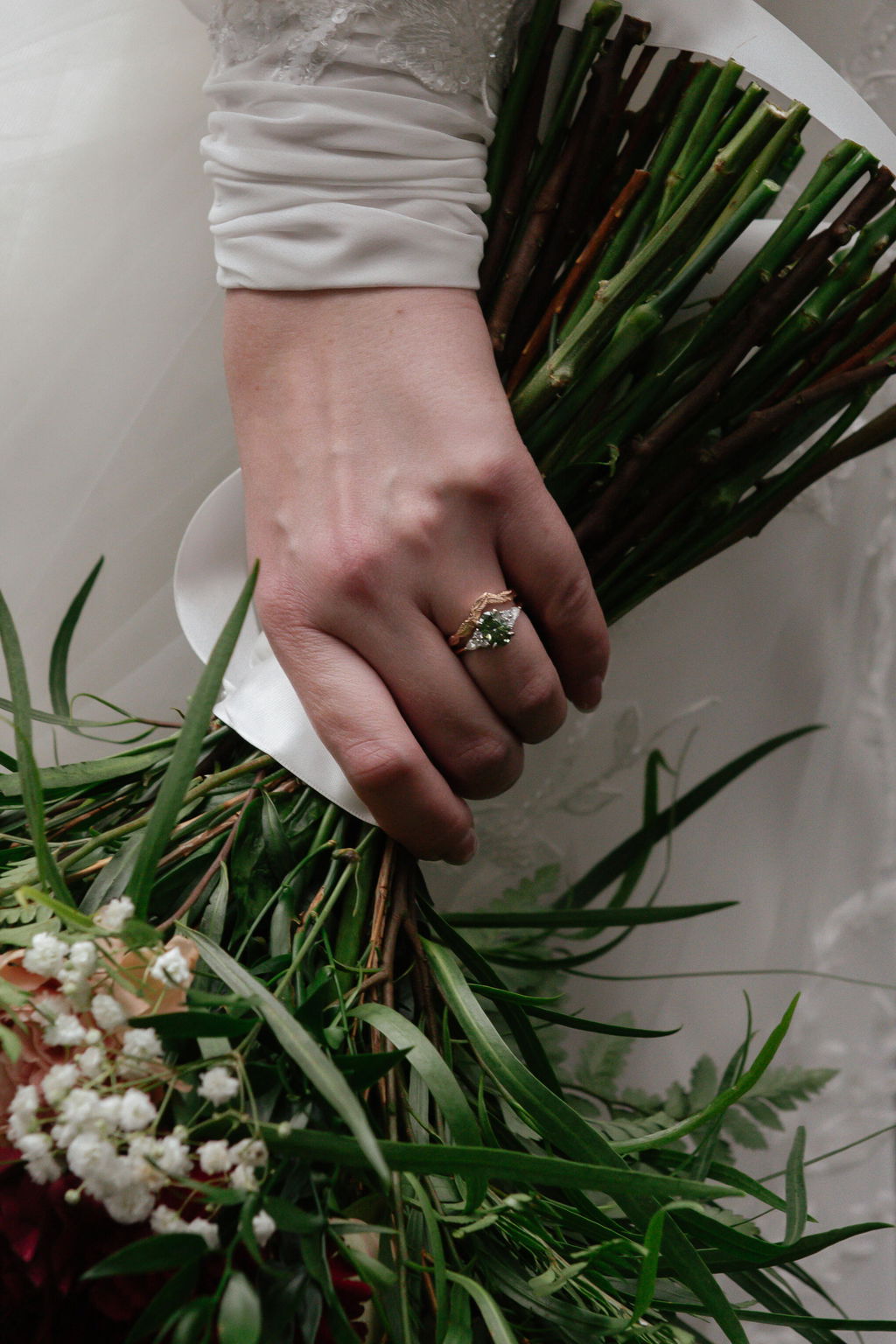
Rose gold has become increasingly popular over the years, with many falling for its soft pink hue and romantic charm. Created by blending gold with copper alloys, rose gold offers a warm uniqueness without being overly bold. Its vintage-inspired appearance works beautifully with delicate, nature-inspired ring designs, and its copper content makes it comparatively durable for everyday wear.
Unlike white gold, rose gold does not require rhodium plating, so it generally needs less ongoing maintenance over time. This metal suits a wide range of skin tones and complements couples seeking a softer, more distinctive look.
How to Choose: Matching Your Skin Tone and Lifestyle Needs
When choosing the colour of your ring, it is worth weighing up both your style preferences and your daily lifestyle.
| Gold colour | Best suited skin tone | Style | Ongoing maintenance |
|---|---|---|---|
| Yellow gold | Warm, olive and darker tones | Traditional, vintage | Low |
| White gold | Cooler tones | Modern, minimalist | Occasional rhodium replating |
| Rose gold | Most skin tones | Romantic, nature-inspired | Low |
If durability is your priority, 9k or 14k gold is generally more practical, while 18k gold offers a richer, more luxurious feel for those who prioritise tone over hardness. Ultimately, the right wedding band for you will be personal, comfortable and timeless.
Recycled Gold: A More Sustainable Choice
Alongside colour and carat, it is worth considering where your gold comes from. Newly mined gold carries a significant environmental footprint, from land disturbance to the energy used in extraction and refining.
Recycled gold, refined from existing jewellery, coins or industrial sources, offers the same purity, colour and durability as newly mined gold, without the need for further mining. Many jewellers, including Vinny & Charles, use recycled gold and aim to increase this proportion over time, as part of a broader commitment to sustainable, ethically sourced jewellery.
At Vinny & Charles, every wedding band is handcrafted in 14k solid gold, chosen for the balance it strikes between everyday durability and a rich, lasting colour. Explore our gold wedding bands in yellow and white gold, or our rose gold wedding rings for a softer, romantic finish. For tips on keeping your ring looking its best, see our jewellery care guide.
Frequently Asked Questions
What is the best gold carat for an everyday wedding ring?
For most people, 14k gold offers the best balance of durability and richness for a wedding band worn daily. 9k gold is more scratch resistant and affordable, while 18k gold has a richer colour but is softer and more prone to surface wear.
Do white gold wedding bands need special care?
Yes. White gold is typically finished with rhodium plating to give it a bright white appearance, and this plating naturally wears away over time. Occasional re-plating keeps the ring looking bright and white.
Is rose gold more durable than white or yellow gold?
Rose gold's copper content makes it comparatively durable and resistant to everyday wear. Unlike white gold, it does not require rhodium plating, so it generally needs less ongoing maintenance.
What is the difference between 9k, 14k and 18k gold?
The difference is the proportion of pure gold in the alloy. 9k gold contains 37.5% pure gold, 14k contains 58.5%, and 18k contains 75%. Higher carats have a richer colour but are softer, while lower carats are more durable and affordable.